
Gear Collections
2025
Collections originally launched on Reverb in 2021 as a way for users to keep track of the gear they owned, but it remained a fairly static experience. Once someone added their gear, there was little reason to come back.
In 2025, Reverb had a renewed focus on driving more incremental listings by converting more buyers into sellers and encouraging existing sellers to list more. That created a clear opportunity for Collections to become more than a tracking tool. We saw the chance to evolve it into a more useful, repeatable part of the Reverb experience by launching it on mobile apps and improving desktop so users had stronger reasons to return, engage with their gear, and eventually list it for sale.
Role
Senior Product Design Manager
My scope
Product strategy, direction, design leadership, cross-functional alignment
Impact
MAUs grew from around 5,800 to over 15,000
27% of active users listed an item from their Collection
Collections drove 11,000 listings in H2 2025
The opportunity
Collections had strong foundation, but it was underdeveloped.
It helped users document what they owned, but it was disconnected from key user behaviors that mattered to the business, like selling, browsing, and re-engaging with Reverb over time.
Collections was only available on desktop and mWeb.
There was a huge untapped user base on the apps. The app users didn’t have access to this feature at all.
Reverb was looking for more ways to drive incremental listings. Collections gave us a natural entry point. If users were already tracking their gear, we could use that moment to help them better understand its value, reflect on what they owned, and make it easier to sell when they were ready.
Bring it to the apps!
Part 1:
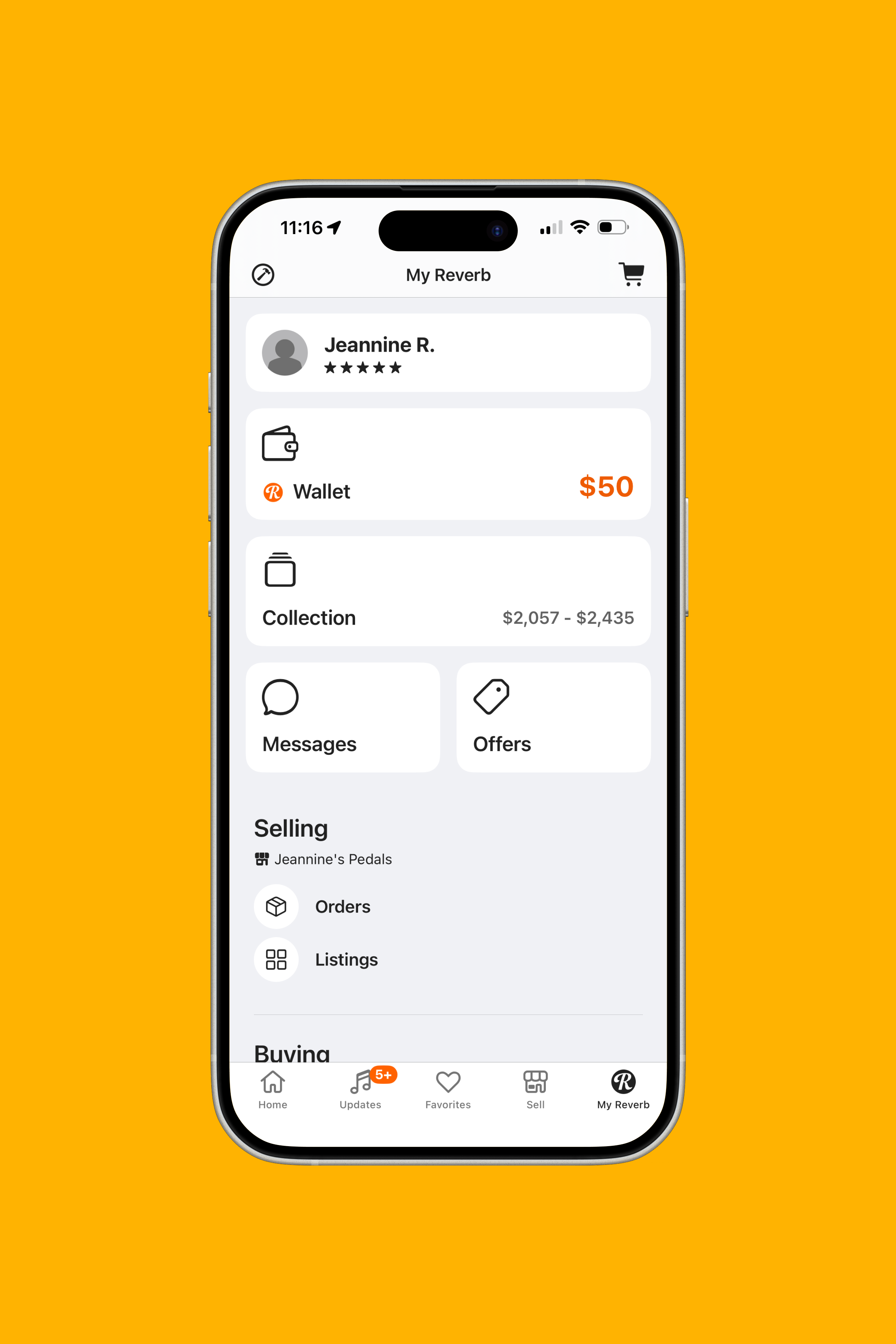
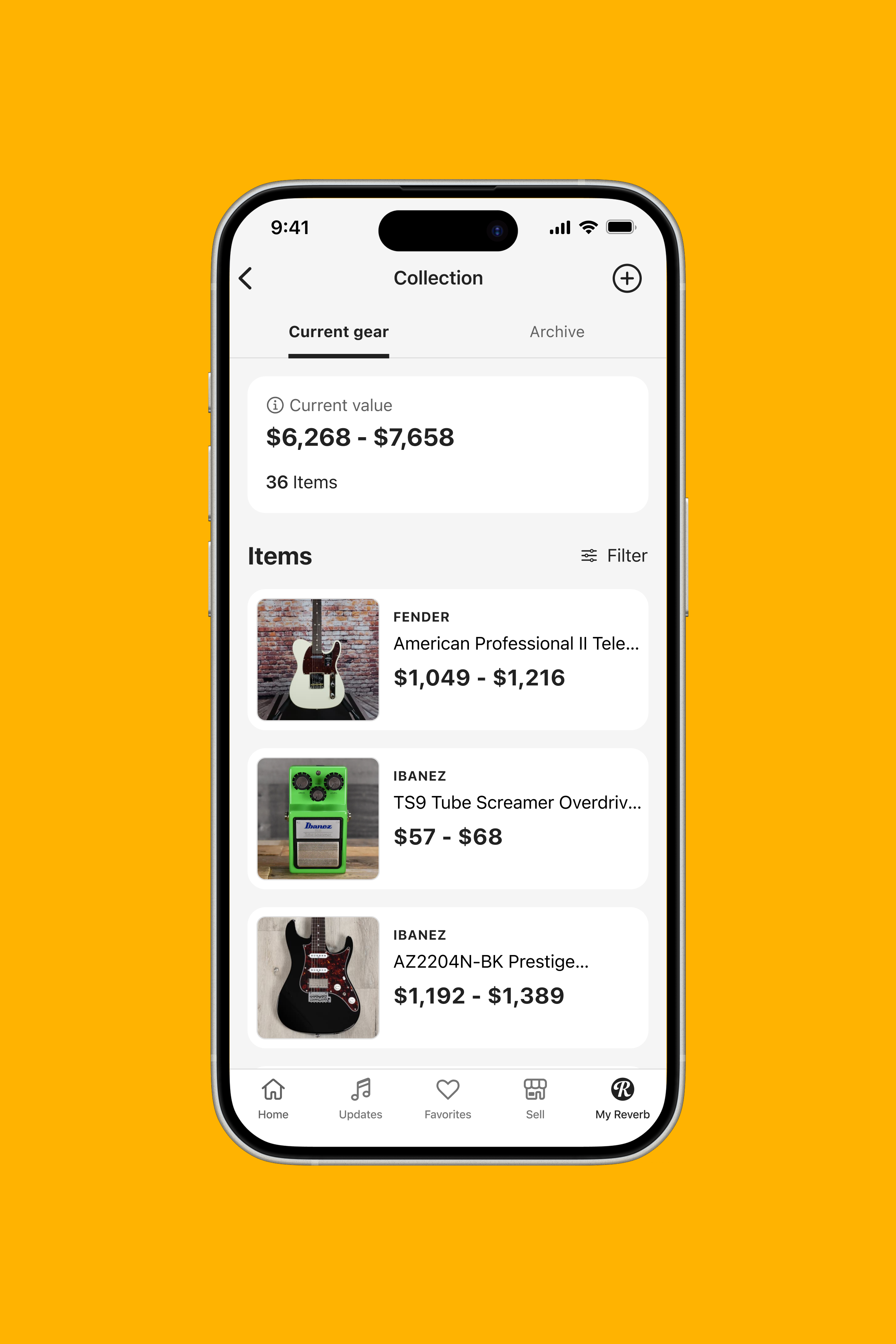
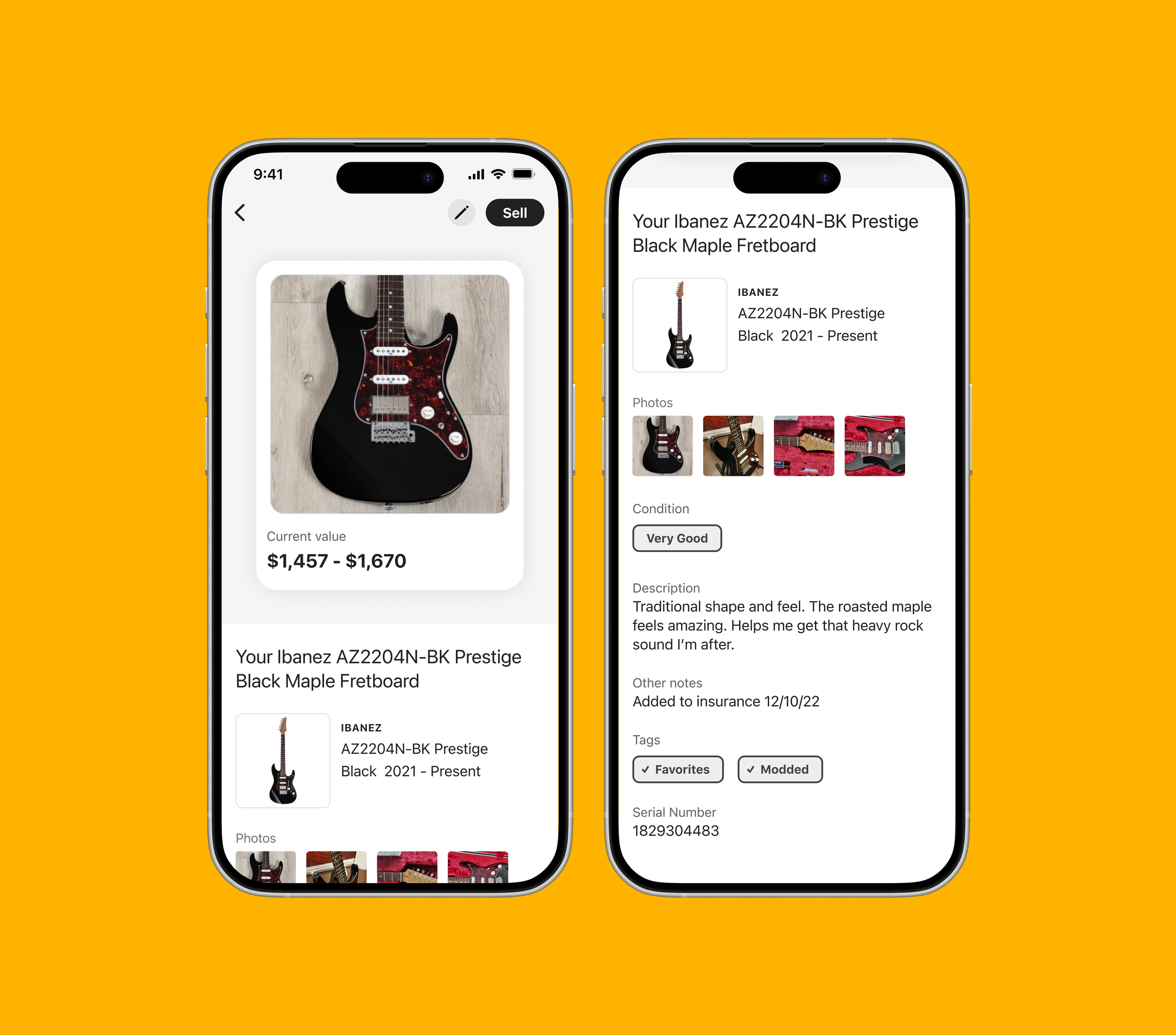
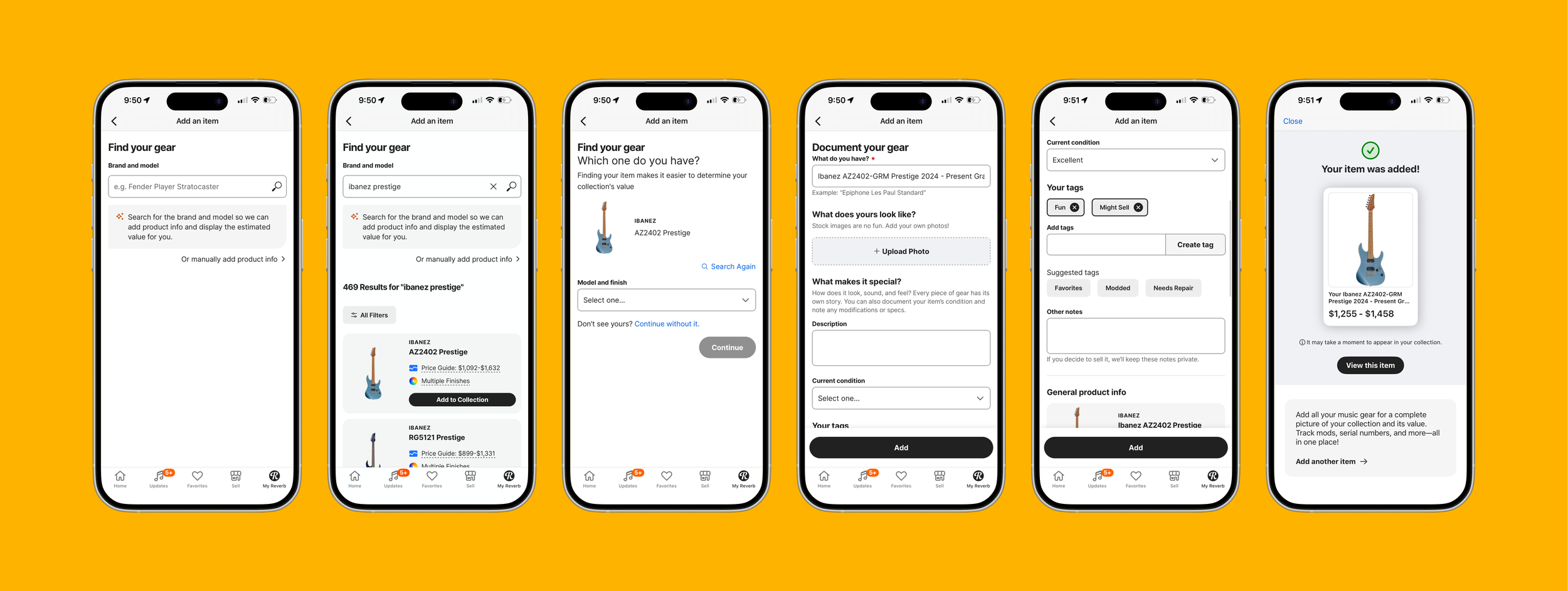
The first step was bringing Collections to iOS and Android by launching the core experience that already existed on desktop and mobile web. Before adding new features, we wanted to establish a strong foundation on apps and make sure a large untapped user base could finally access the product. This gave us a baseline experience across platforms and set us up to iterate on Collections in a much bigger way.
Results
Launching Collections on the apps had an immediate impact on usage. At the end of December 2024, Collections had about 5,800 monthly active users, and we set a goal of reaching 7,500 by the end of 2025, a 29% YOY increase. After launching on iOS and Android in Q2 2025, we quickly exceeded that target and reached 10,000 monthly active users, showing that expanding to apps unlocked meaningful new engagement.
Turn Collections into a destination
Part 2:
Our strategy was to make Collections worth reopening.
We evolved the experience by adding more dynamic and useful features like market signals, pricing trends, reviews, richer gear details, and better organization tools. We also launched “Public Collections”, which let users create lists of items they could make public and share with friends.
We saw Collections as a bridge between ownership and selling.
By making it a place users wanted to revisit, users could track the value of the gear they owned, show off pieces of their collection, and reflect on what was sitting unused. Over time, that created more natural opportunities to encourage selling and support Reverb’s broader vision.
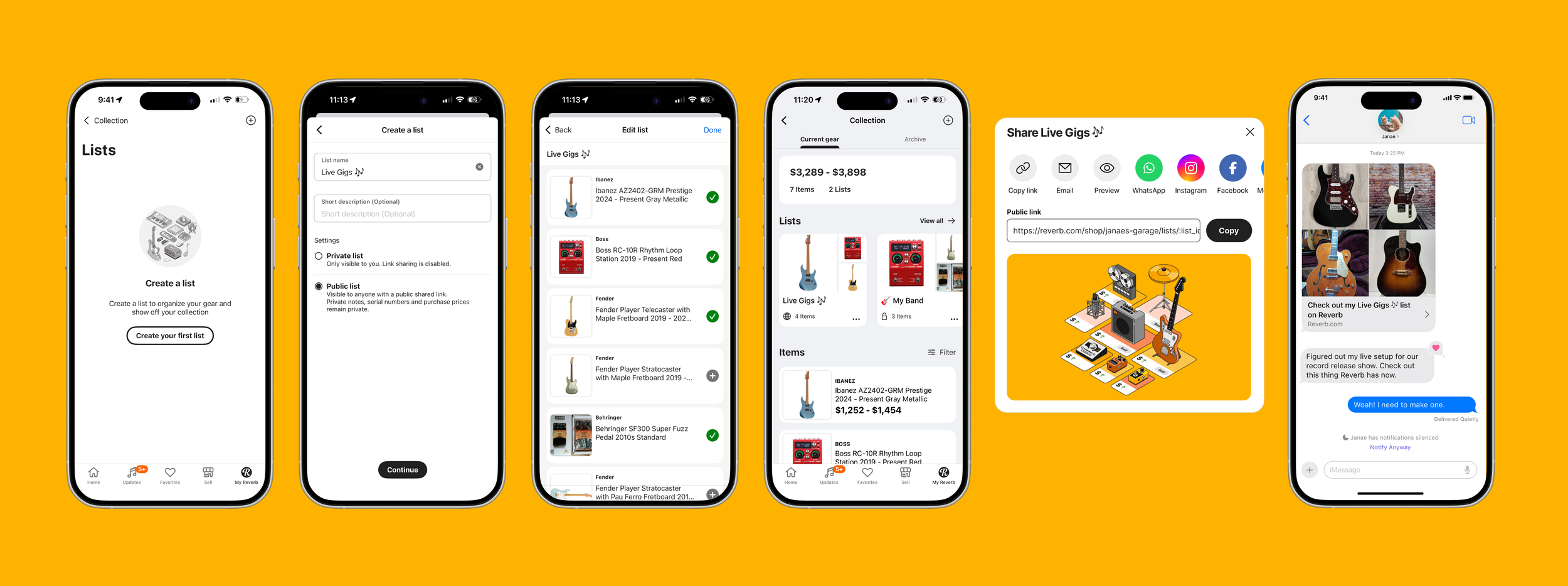
The first new feature we launched was Lists, which made Public Collections possible.
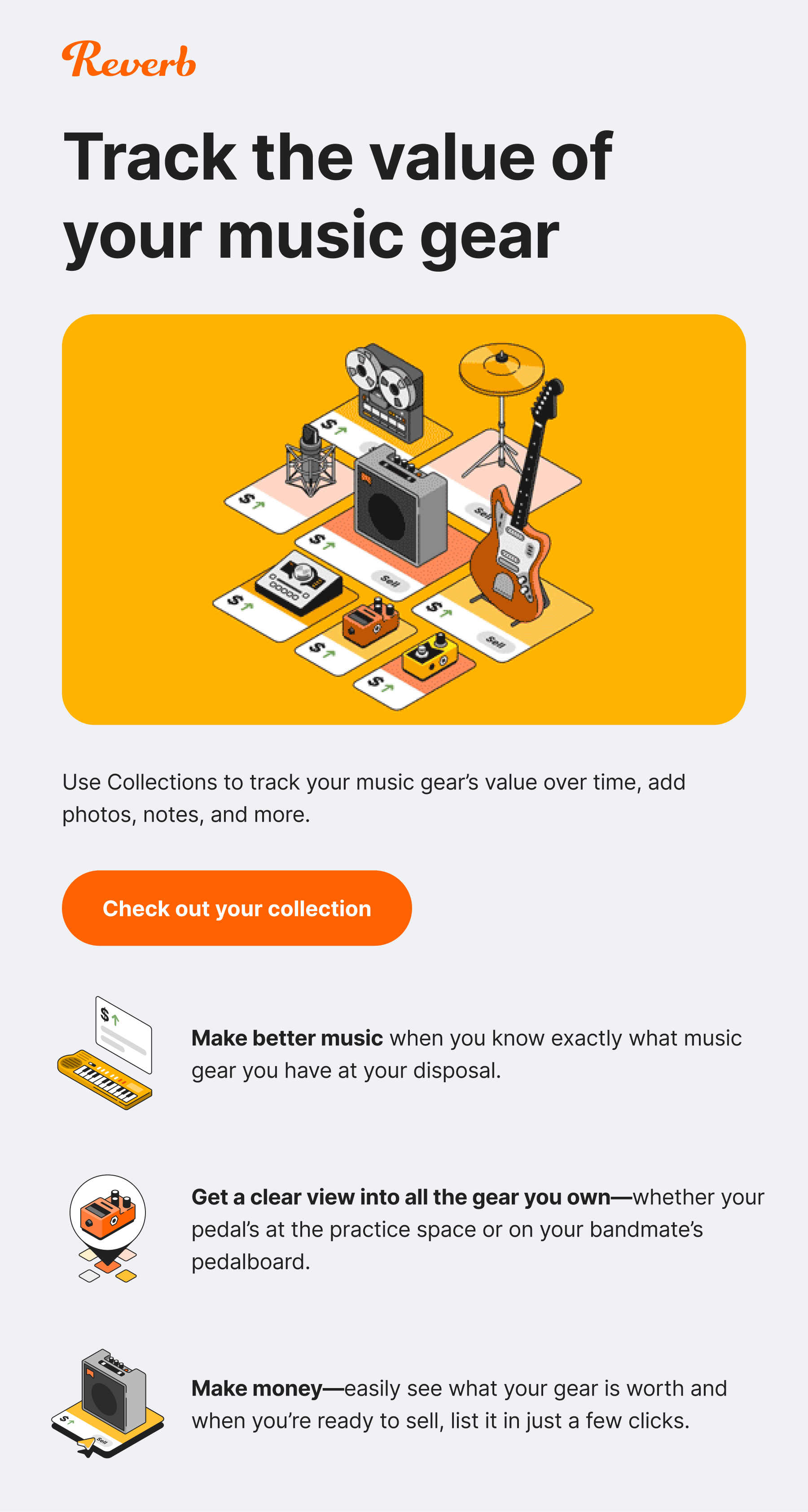
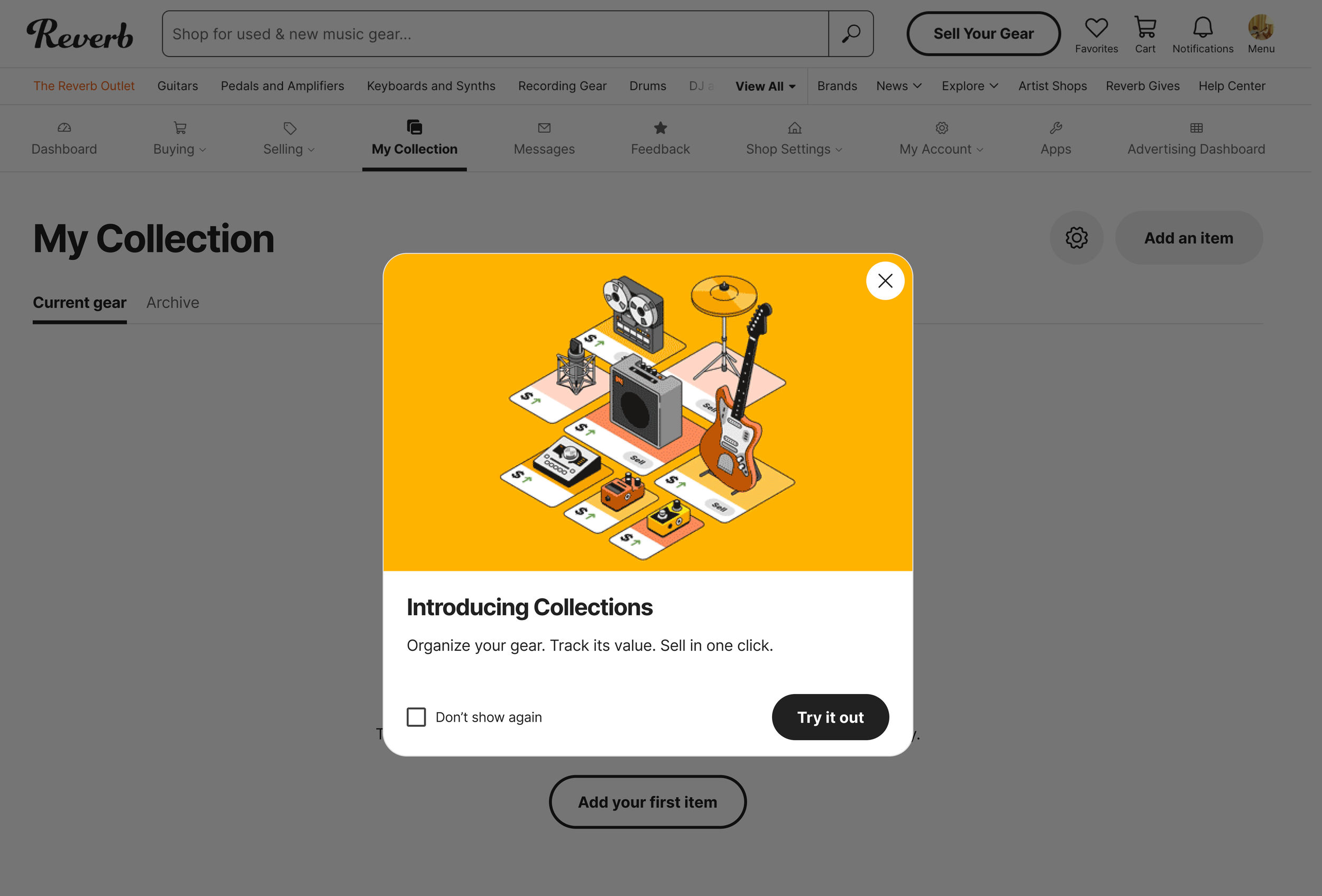
It gave users a more flexible and personal way to organize their gear by creating titled lists, adding items to them, and choosing whether each list was public or private. If a list was public, users could easily share it with friends. We also created supporting marketing assets to help promote the launch and drive awareness now that Collections was on all platforms.
Vision for future iterations
As we worked to make Collections a destination, we developed a broader vision with many compelling features, but we weren’t able to prioritize all of them in 2025.
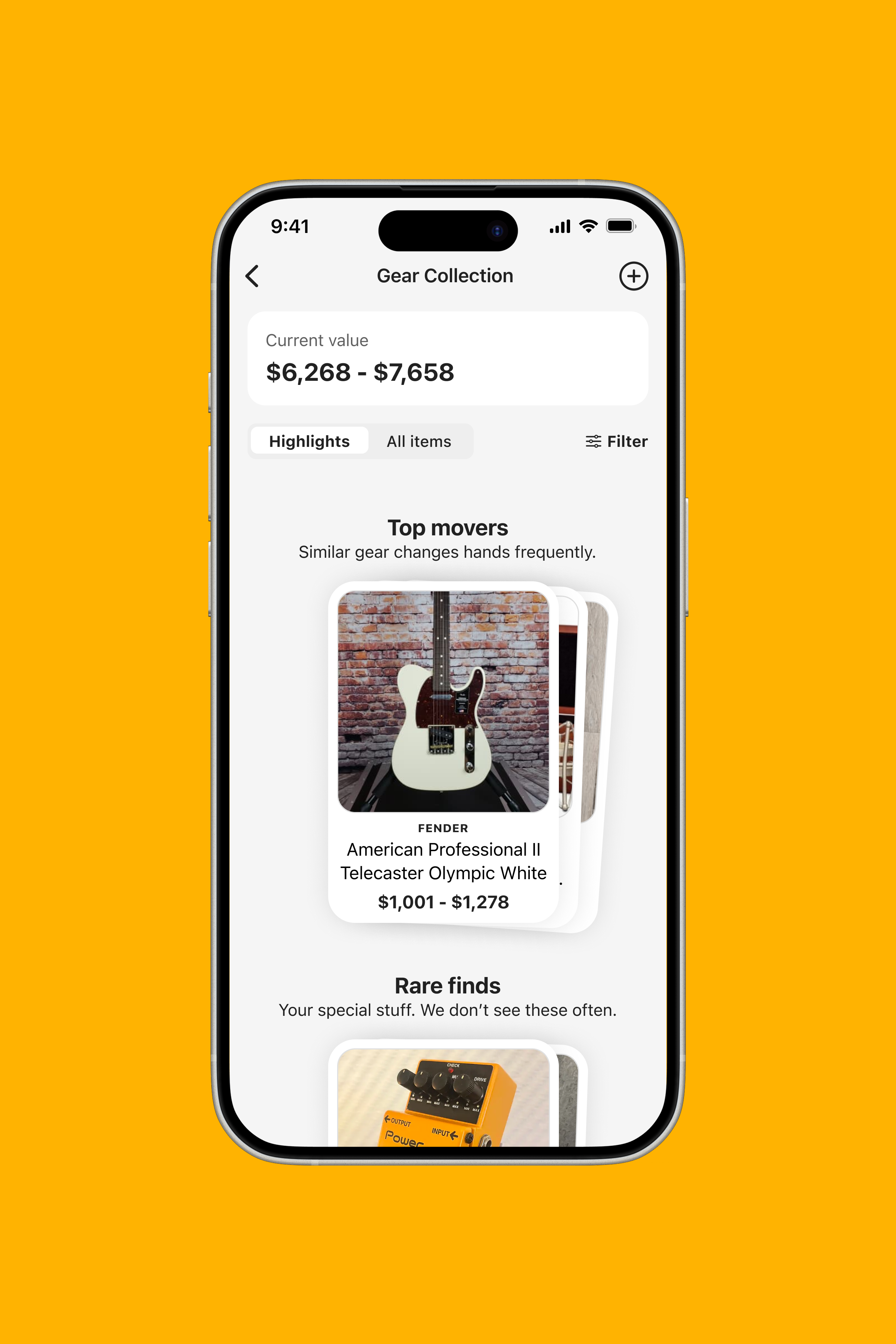
Highlights
Automatically generated lists from a user’s collection, powered by market insights and trends.
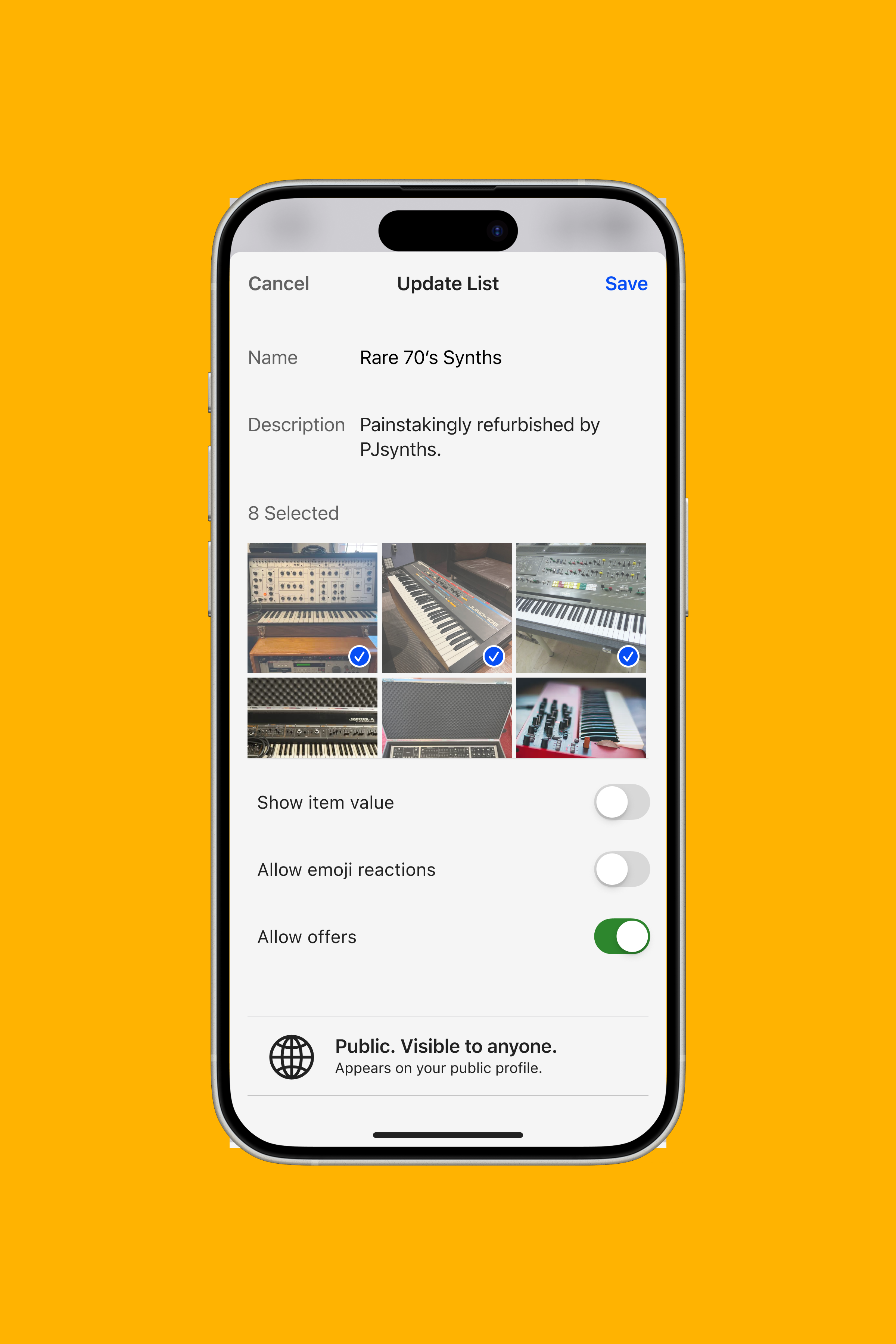
Allow Offers
Users could toggle on offers if they were open to negotiating directly with potential buyers on items from their public lists.
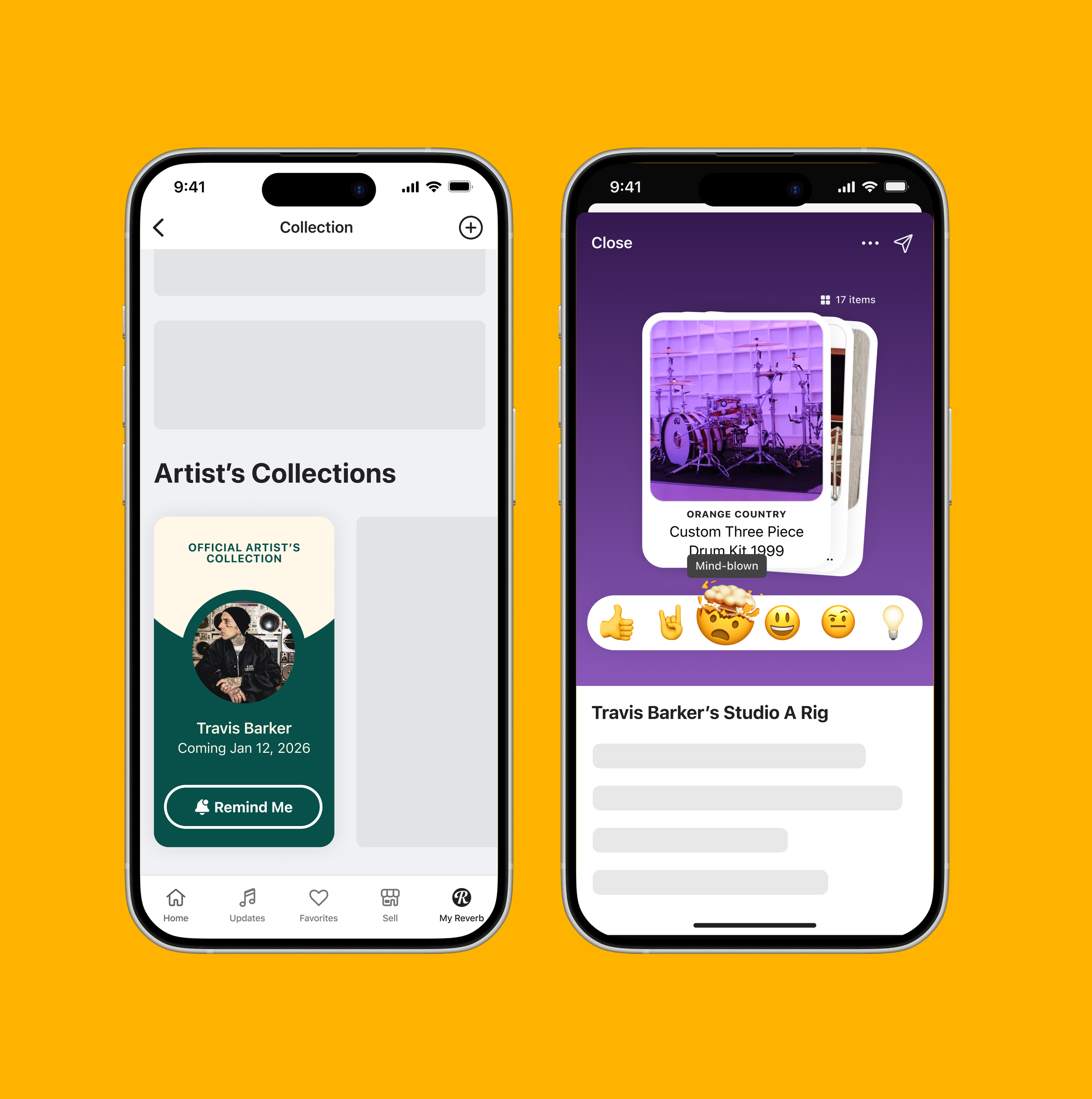
Artist Collections
We would partner with notable musicians and bands to create public collections that fans could explore for inspiration. Featuring these on the homepage could help introduce more users to Collections and expand its reach.
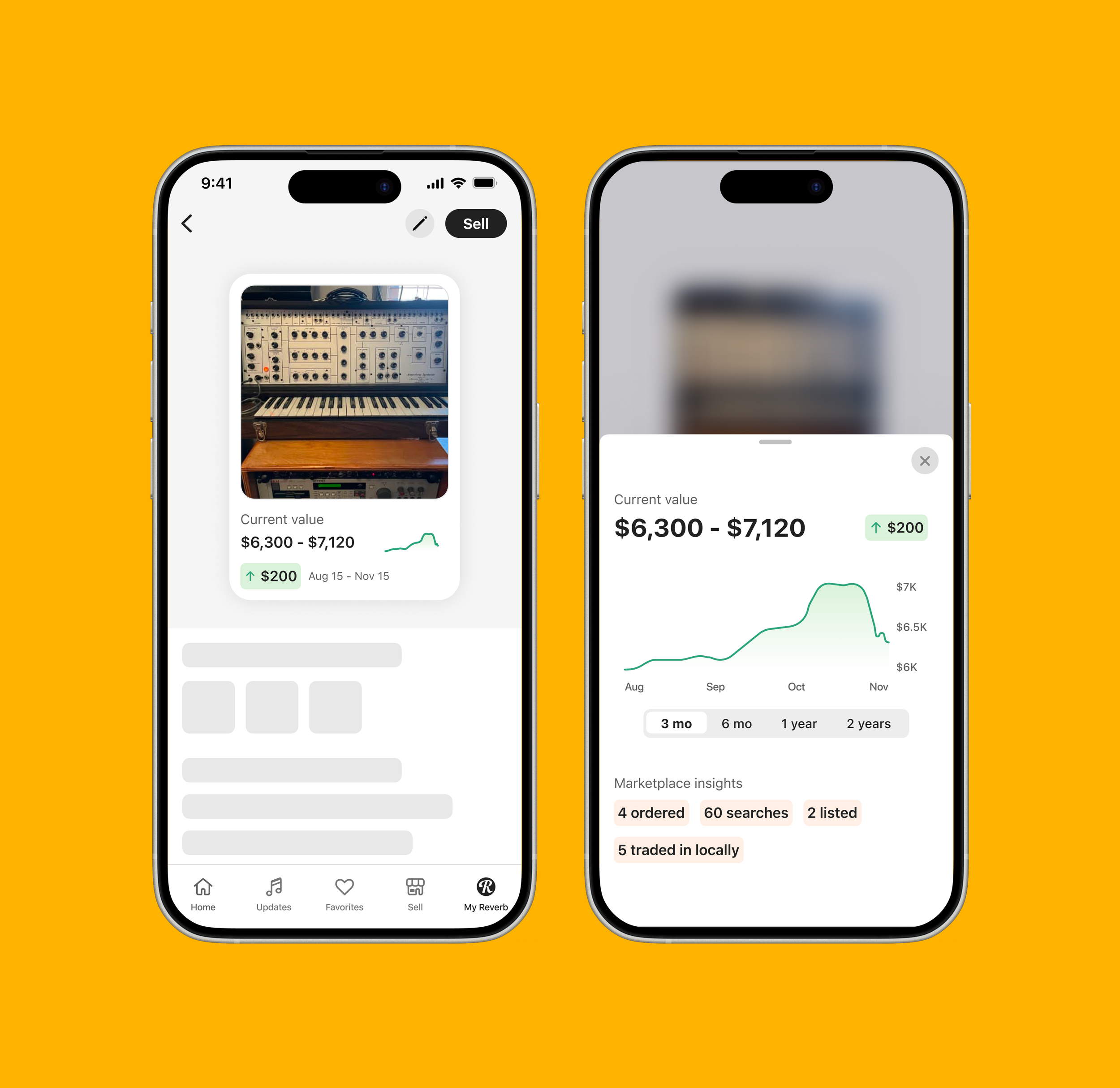
Better insights
We would expand the Collection item page with richer pricing graphs and deeper marketplace insights, giving users a clearer view of what their gear is worth and when it might be a good time to sell.
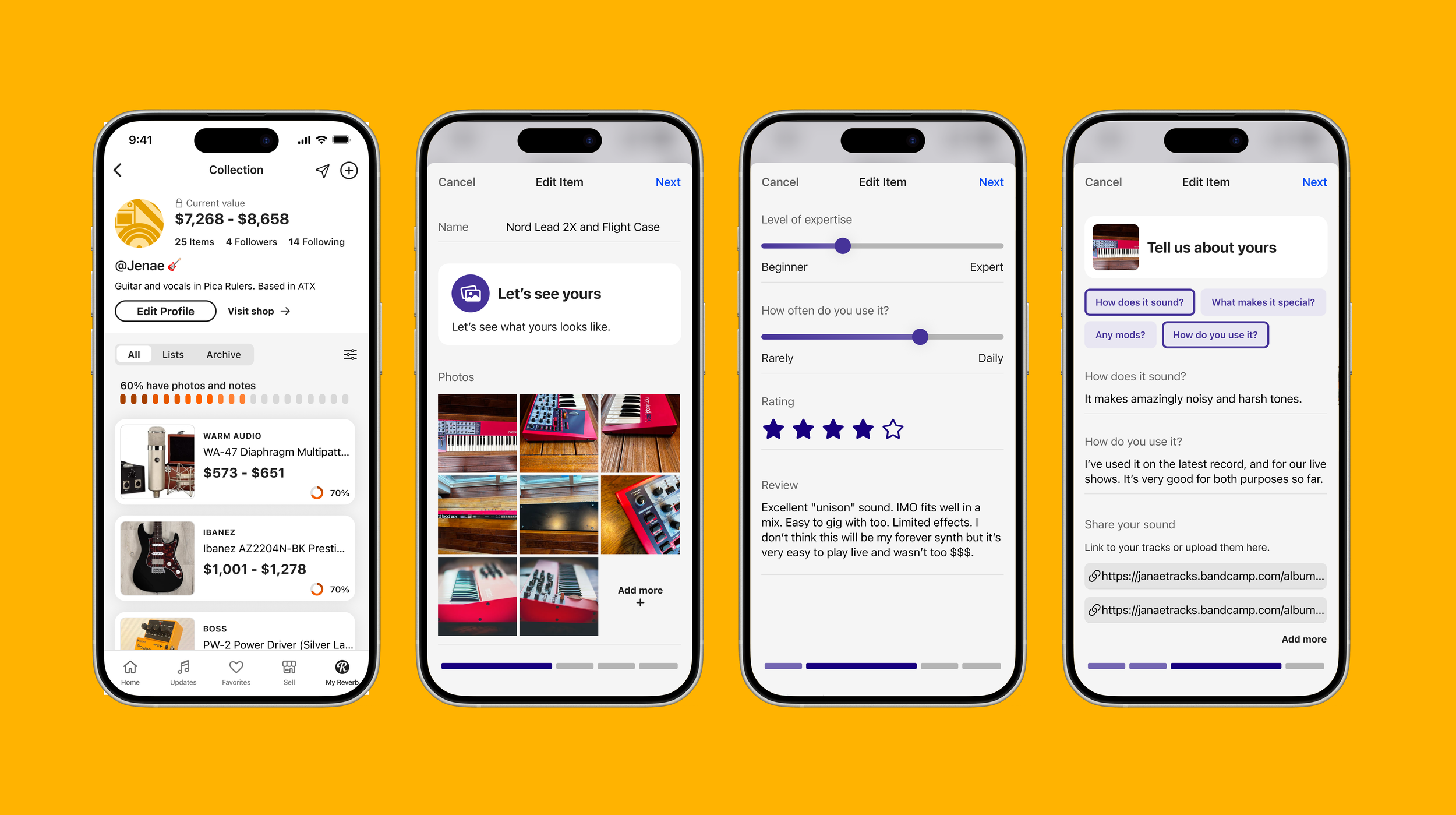
Gamify item details
We would make editing Collection items more rewarding by introducing a completion percentage and encouraging users to fill out richer details about their gear. Users could share things like their experience level, how often they play an item, and other personal context to make their Collection more complete and more uniquely theirs.
My role
I helped shape the product strategy and long-term vision for Collections, partnering closely with Product and Engineering leadership as the work evolved. I directed and supported the Staff Product Designer, helped the team navigate tradeoffs and shifting priorities, and pushed for a cohesive, polished experience across platforms.
Results
The work had a meaningful impact on both engagement and selling behavior. Monthly active Collections users tripled, growing from 5,800 to over 15,000. Collections also proved to be a strong driver of selling activity, with 27% of active users listing something for sale from their Collection over the past year, resulting in 11,000 listings.
We had strong momentum going into 2026 and a meaningful roadmap of future iterations we were excited to build. However, after the company changed hands, broader business priorities shifted and Collections was no longer prioritized in the same way. Even so, the work showed clear potential and established Collections as a valuable way to drive both engagement and listings.